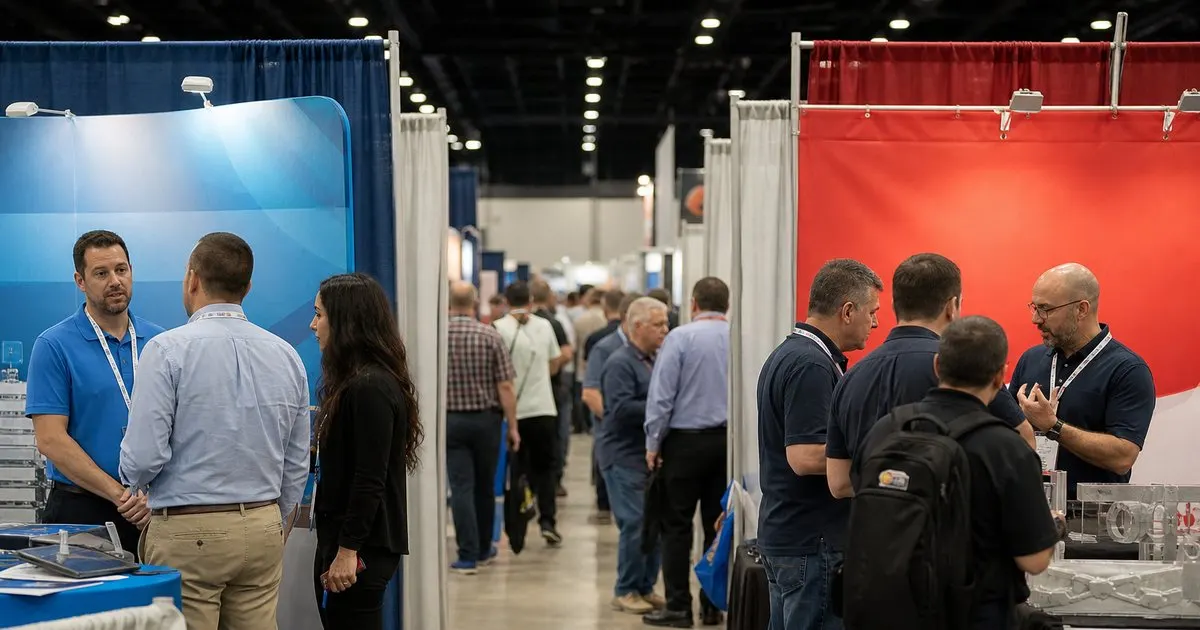
How do you keep competing exhibitors from being placed side by side on a crowded show floor?
Nobody wants to spend three days shouting over a direct competitor. Here is how organizers manage competitor separation without freezing the floor plan.
Decide what your show promises about separation
Some shows guarantee that direct competitors will not be adjacent. Others make no promise and treat the floor as first come, first served. Both are defensible, but the worst position is an unstated one, where exhibitors assume a protection you never intended to offer. Decide the policy, write it into the exhibitor agreement and the booking page, and be precise about what counts as a competitor: the same product category, the same customer, or only a company the exhibitor names explicitly. Related: How do you prevent two exhibitors from being sold the exact same booth at a busy expo?
A common middle path is to promise best efforts rather than a guarantee. You will avoid placing exhibitors next to companies they identify as direct competitors at booking, subject to availability and the timing of their reservation. That gives early bookers real protection, gives you room to fill the floor, and avoids the situation where an exhibitor demands a move on the morning of the show because a competitor booked the adjacent space months after they did. Related: How can expo organizers sell trade show booths online without endless back and forth emails?
Keep reading: How can expo organizers sell trade show booths online without endless back and forth emails?, How do you prevent two exhibitors from being sold the exact same booth at a busy expo?, What makes an interactive expo floor plan actually useful for both organizers and exhibitors?. See how BoothBookr helps you trade show booth booking and floor plans.
Capture the information at booking, not after
Competitor separation only works if you know who competes with whom before booths are assigned. Add two things to the booking form: a product or service category selected from a list you control, and a free-text field where the exhibitor can name up to a few companies they do not want to be placed beside. The category gives you a systematic view; the named list catches rivalries the category cannot see, such as two firms fighting over the same regional customers.
Keep the category list short and mutually exclusive, because a list of sixty categories produces sixty ways to be wrong. The goal is to spot the obvious conflicts, not to build a taxonomy of the industry. Review the free-text names as they come in, because exhibitors sometimes name a company that is not exhibiting at all, or one that has already booked the space next door, in which case you want to know early enough to offer alternatives.
Check adjacency at the moment of assignment
With categories and named competitors attached to every booking, checking for conflicts becomes a step in booth assignment rather than a forensic exercise. When a booth is selected, look at the booths sharing a wall, across the aisle, and diagonally at the corners, and compare their categories and named lists against the new booking. If there is a match, the organizer either offers a different space or asks the new exhibitor to confirm they are comfortable. Doing this live, while the exhibitor is choosing, avoids reversals. Related: How should expo organizers collect booth payments so a reserved spot is truly secured, not just promised?
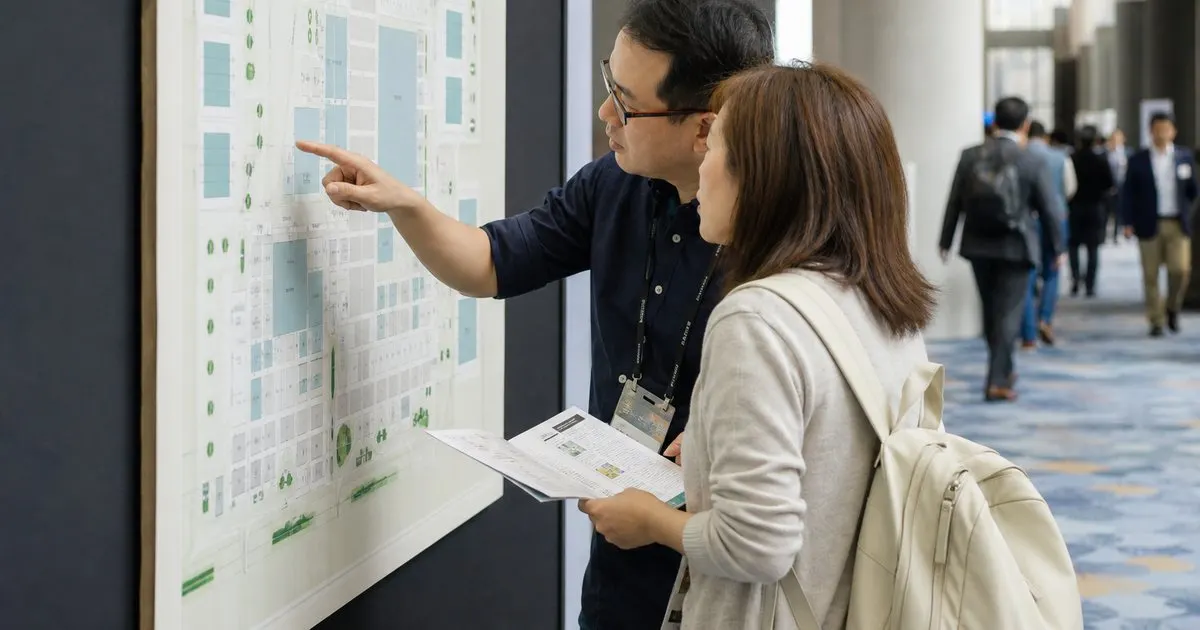
If you sell booths through an interactive floor plan, you can build the rule into the tool: flag booths that would create a conflict for this exhibitor, or hide them from selection entirely for that session. That is one of the few places where automation is clearly better than judgment, because a human assigning booths on a busy sales day will miss adjacencies that a simple neighbor check catches every time. Related: What makes an interactive expo floor plan actually useful for both organizers and exhibitors?
Handle the conflicts that surface anyway
Some conflicts are unavoidable. A competitor rebrands, two companies merge, or an exhibitor discovers a rival they forgot to name. When it happens, treat the request to move seriously but within the rules. If the exhibitor booked early and named the competitor, you owe them a comparable relocation. If they did not name anyone and the category check passed, you can offer a move if space exists, but you are not obligated to displace someone else. Say which case applies and why.
Sometimes the best resolution is to leave both exhibitors where they are and talk to each. Competitors placed close together often report stronger traffic, because attendees comparing options walk the same stretch of aisle, and a calm conversation about that reality resolves more complaints than a scramble to move booths. Record every request and its outcome in the exhibitor records, so next year's assignment starts with a full picture of who should sit far from whom.
- Decide and publish whether you guarantee separation, promise best efforts, or make no commitment.
- Collect a controlled product category and a short list of named competitors on the booking form.
- Check neighboring booths for category and named conflicts at the moment of assignment, ideally in the tool.
- When a conflict surfaces late, apply the published rule, offer a comparable move if owed, and record the outcome.

Julien Jimenez
Julien Jimenez is an independent software builder based in Paris. He designs, ships, and operates focused SaaS products for small businesses and independent professionals. Read the full author page.
Sell booths from a live map
Trade show booth booking and floor plans. BoothBookr is built to help you put this into practice.
Build your floor planMore from the BoothBookr blog

Get the BoothBookr playbook
Practical guides on exhibitor management, straight to your inbox as we publish them. No spam, unsubscribe any time.