Why does every booth booking need a signed exhibitor agreement even after the invoice is paid?
Payment secures the money. The agreement secures everything else: the rules, the risk, and the answer to every dispute. Here is why the two are not interchangeable.
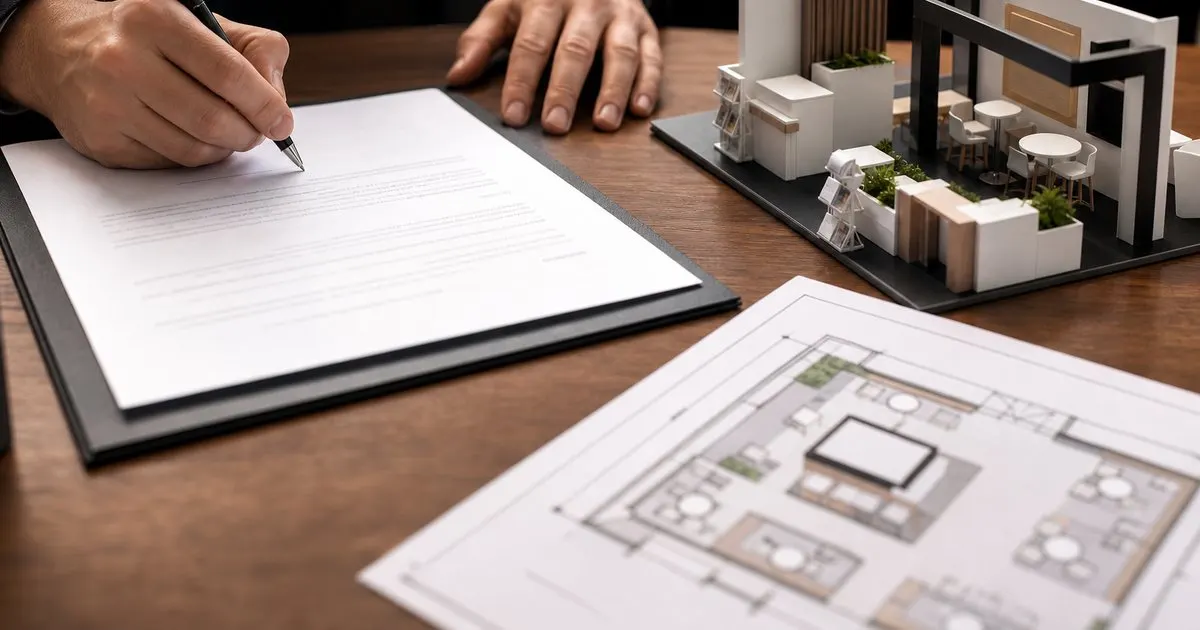
A paid invoice proves a transaction, not the terms
When the payment clears, it is easy to feel that the booking is complete. It is not. An invoice records that a company paid a certain amount for a certain booth, and if a dispute arises, that is the only thing it proves. It says nothing about what happens if the company cancels, whether it can sublet half the space to a partner, how tall its back wall can be, who is liable if a display falls on an attendee, or whether you can relocate the booth if the floor plan changes. Those questions are answered only by an agreement the exhibitor has accepted. Related: How do you prevent two exhibitors from being sold the exact same booth at a busy expo?
Organizers sometimes skip the agreement for long-standing exhibitors or for small spaces on the theory that the relationship is enough. That works until it does not, and when it fails, it fails at the worst moment, typically on move-in day or in the weeks before the show when a cancellation lands. A signed agreement, or an electronic acceptance recorded at checkout, costs the exhibitor a minute and gives both sides a shared rulebook. Related: What makes an interactive expo floor plan actually useful for both organizers and exhibitors?
Keep reading: How can expo organizers sell trade show booths online without endless back and forth emails?, How do you prevent two exhibitors from being sold the exact same booth at a busy expo?, What makes an interactive expo floor plan actually useful for both organizers and exhibitors?. See how BoothBookr helps you trade show booth booking and floor plans.
What the agreement needs to cover to be useful
A workable exhibitor agreement is not a long legal document. It covers a short list of things that actually come up: the cancellation and refund schedule with dates; the payment schedule and what happens on a missed balance date; the organizer's right to relocate a booth for layout or safety reasons and what the exhibitor gets in return; display rules including heights, line of sight, sound, and hanging signs; move-in and move-out obligations and penalties for early teardown; a ban on subletting or sharing space without approval; and a requirement to follow venue and fire authority rules. Related: How should expo organizers collect booth payments so a reserved spot is truly secured, not just promised?
It also needs the risk clauses that protect you: a certificate of insurance requirement with minimum coverage and the parties to be named as additional insured, an indemnification clause for damage or injury caused by the exhibitor, and a clear statement that the organizer is not responsible for the exhibitor's property. Have an attorney review this once, then reuse it. The goal is a document exhibitors will actually read, which means plain headings and short sentences rather than pages of dense text.
How the agreement changes day-to-day operations
The practical value of the agreement shows up in small moments. An exhibitor asks to move because a competitor landed next door; the relocation clause tells you what you can offer. A company wants to bring a partner into its booth; the subletting clause tells you to treat that as a separate booking. A back wall shows up two feet taller than allowed; the display rules give the floor manager something to point to at seven in the morning. Without the agreement, each of these becomes a negotiation with someone who is stressed and has a truck waiting. Related: How can expo organizers sell trade show booths online without endless back and forth emails?
It also protects your staff from being the bad guy. When the rule is in a document the exhibitor accepted at booking, enforcing it is administration rather than a personal judgment call. That is easier on the floor team and on the relationship, because the exhibitor is arguing with a document rather than with a person, and the document does not get tired or make exceptions for whoever is loudest.
Make acceptance part of the booking flow, not a separate chase
The reason agreements go unsigned is that they are sent as a separate step after the booking. The exhibitor is excited, pays the deposit, and then a PDF arrives asking for a signature and sits in an inbox. The fix is to fold acceptance into checkout: the exhibitor reads a summary, checks a box confirming they accept the full terms, and the system records the timestamp, the version of the terms accepted, and the person who accepted them. That record serves as a signature for most purposes and it never gets lost.
Keep the accepted version attached to the exhibitor's record so that if you revise the terms next year, you know exactly what each company agreed to. Version tracking matters more than it seems, because disputes often turn on whether a particular clause existed when the booking was made. Booth booking platforms that store the accepted terms alongside the booth, the invoice, and the correspondence turn this from a filing problem into a settled fact.
- A paid invoice proves the transaction, while the agreement governs cancellations, relocations, display rules, and liability.
- Keep the agreement short and practical, but include insurance, indemnification, and subletting clauses reviewed once by an attorney.
- The agreement gives floor staff a document to enforce instead of a personal argument on move-in morning.
- Record acceptance at checkout with a timestamp and terms version so nothing depends on chasing a PDF.

Julien Jimenez
Julien Jimenez is an independent software builder based in Paris. He designs, ships, and operates focused SaaS products for small businesses and independent professionals. Read the full author page.
Sell booths from a live map
Trade show booth booking and floor plans. BoothBookr is built to help you put this into practice.
Build your floor planMore from the BoothBookr blog


Get the BoothBookr playbook
Practical guides on exhibitor management, straight to your inbox as we publish them. No spam, unsubscribe any time.